
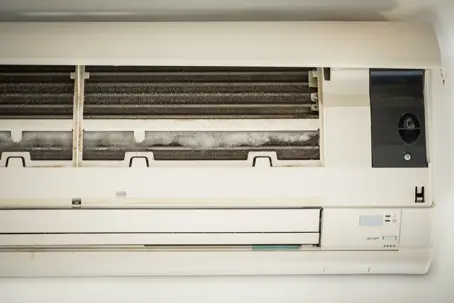
It might seem like a miracle to see frost forming on your outdoor unit during a sweltering North Texas July, but ice is actually a major red flag for your cooling system. While it seems counterintuitive that a machine designed to cool your home can "freeze," an icy evaporator coil is a sign that your system is under extreme stress. Ignoring this symptom can lead to a total system failure at precisely the time when Texas heat is at its peak, often requiring an emergency AC repair to restore comfort to your household.
Top 5 Reasons Why Your AC is Freezing Over
At Quality 1 Energy Systems Heating & Air Conditioning, our mechanical engineering background helps us understand that your AC doesn't actually "create" cold; it removes heat from your indoor air. When the following issues occur, the heat exchange fails, and your system transforms into an ice block.
1. Restricted Airflow from Clogged Filters
The most common reason for a freeze-up is a lack of airflow. If warm air from your home cannot pass over the evaporator coils because of a dirty air filter, the refrigerant inside the coils remains too cold. This causes the moisture in the air to freeze onto the coils rather than draining away.
2. Low Refrigerant Levels or Leaks
Refrigerant is the lifeblood of your system. If there is a leak, the pressure within the system drops significantly. Paradoxically, lower pressure leads to lower temperatures, causing the coils to drop well below freezing and turn condensation into solid ice almost instantly.
3. Accumulated Dust and Grime on Coils
Even if your airflow is good, dirty coils can't absorb heat effectively. Dust acts as an insulator, preventing the refrigerant from absorbing heat from your home. This leads to a gradual temperature drop that builds layers of frost across the entire indoor unit.
4. Mechanical Faults in the Blower Fan
If your fan isn't spinning at the correct speed or has failed entirely, no air is moving across the system. Without that constant stream of warm house air to "thaw" the cooling process, the unit will quickly over-cool itself and freeze solid.
5. Blocked or Closed Supply Vents
Many homeowners close vents in unused rooms to "save energy," but this actually disrupts the system's static pressure. Closing too many vents restricts the air volume returning to the unit, causing the temperature to plummet and ice to form on the internal components.
Protect Your Compressor: Immediate Steps to Take
Running a frozen AC is a recipe for disaster. Ice forces the system to work overtime, spiking your utility bills and placing immense strain on the compressor—the most expensive part of your unit. A frozen coil can cause liquid refrigerant to flood the compressor, often resulting in permanent mechanical damage.
If you notice ice, take these immediate actions:
Shut it Down: Turn off the cooling at the thermostat immediately to prevent further damage.
Thaw the System: Switch the fan setting to "On" to circulate warm air over the coils.
Call for Help: Reach out to a professional once the ice has melted to diagnose the root cause.
Our engineering-led team serves the entire Dallas Metroplex and will ensure your system returns to peak performance. Contact Quality 1 Energy Systems Heating & Air Conditioning at (469) 351-5521 to schedule your inspection today.